Learn how roofing roof repair costs escalate over time, how to vet contractors, and when to repair vs. replace your roof with clear tables and steps.
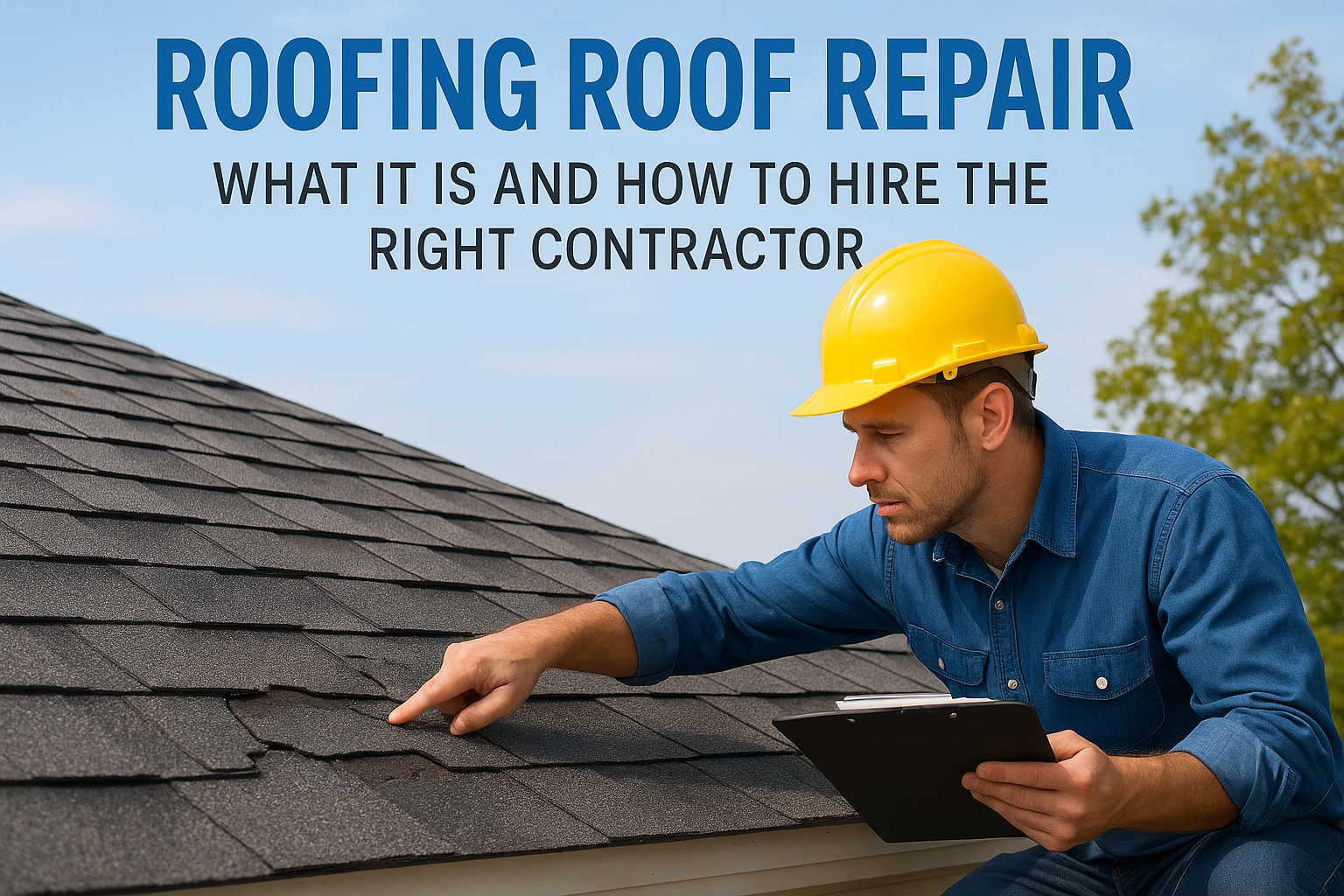
A cracked shingle after a hailstorm or a slow leak in the attic sends most homeowners straight to a search bar, typing something like roofing roof repair and hoping the first contractor they find is honest. That instinct is right to be cautious. Roof work is expensive, hard to inspect yourself, and full of contractors who push replacement when a repair would do, or patch things temporarily so you'll call again in a year.
This article breaks down what roof repair actually covers, how it differs from a full roof replacement contractor job, and what separates a reliable residential roofing contractor from one chasing a quick sale. You'll learn how legitimate repairs get diagnosed, priced, and documented, so you're not guessing whether the estimate in your hand is fair.
We'll also walk through the specific questions to ask before signing anything, what a proper inspection should include, and how insurance claims fit into the process when storm damage is involved. By the end, you'll know exactly what to look for and what to avoid when hiring someone to work on your roof.”
A small roof problem rarely stays small. Water finds the path of least resistance, and once it gets past your shingles, it doesn't stop at the decking. It travels along rafters, soaks insulation, and eventually shows up as one of the telltale signs of a roof leak: a stain on your ceiling weeks or months after the original damage happened. Roofing roof repair done early, while the issue is still a torn shingle or a cracked pipe boot, costs a fraction of what you'll pay once that same problem has rotted plywood decking or ruined drywall inside your home.
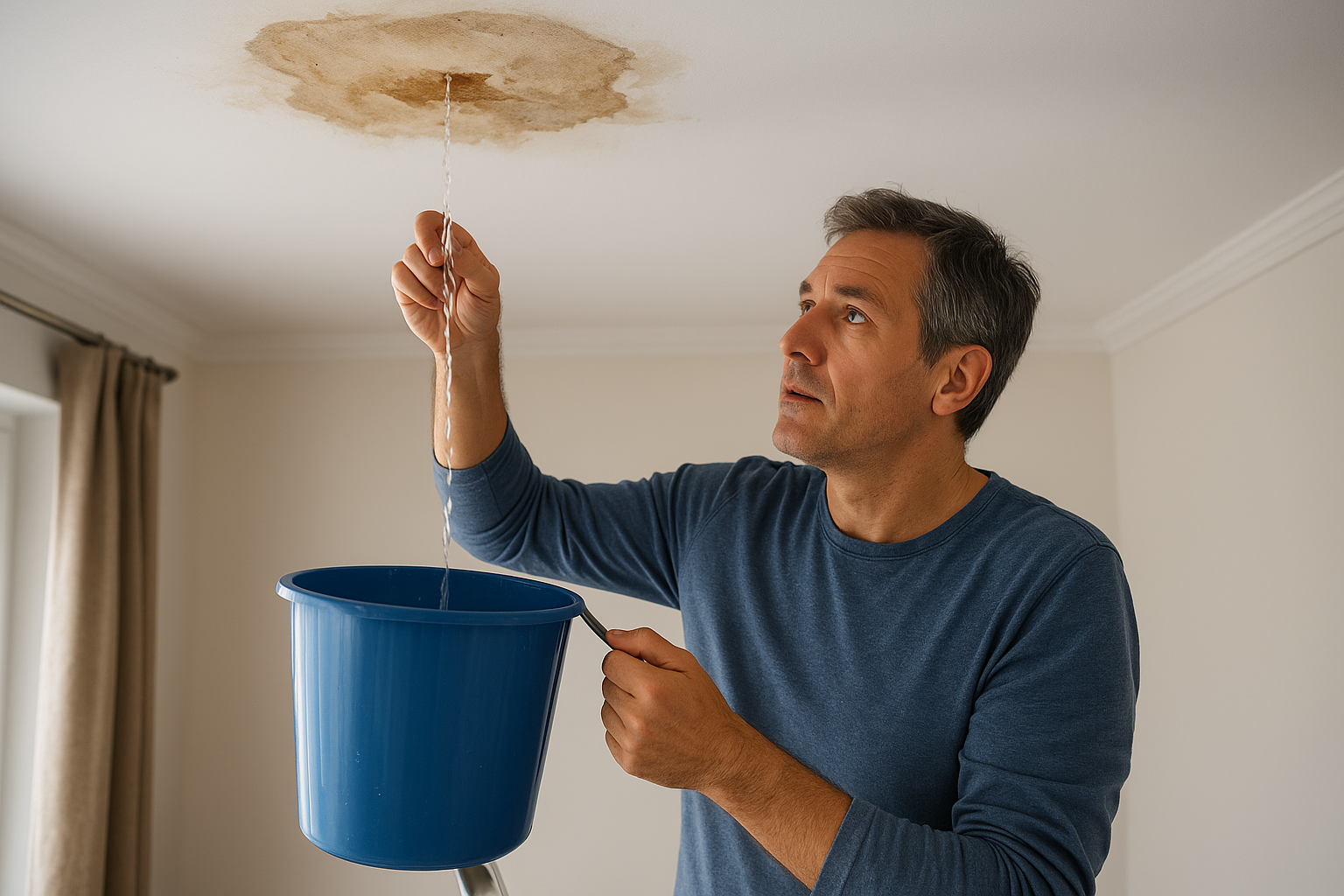
Homeowners often assume a leak means a bucket in the attic and a quick patch. In practice, a leak that sits for even a single Texas storm season can soften the roof decking underneath it. Once decking goes soft, a simple shingle repair turns into a decking replacement, which means tearing off more of the roof than the original damage ever touched. Wood rot spreads quietly behind drywall and insulation, so by the time you see a brown ring on the ceiling, one of the clearest examples of roof damage you shouldn't ignore, the damage has usually been building for a while.
A $300 repair ignored for one rainy season can become a $3,000 decking replacement.
Moisture that gets trapped in your attic doesn't just threaten wood. It creates the exact conditions mold needs to grow, and it gives insulation nowhere to dry out, which drags down its ability to keep your home's temperature stable. That shows up on your energy bill before it shows up anywhere else. Gaps around flashing or lifted shingles also give squirrels, wasps, and other pests an easy way into your attic, turning a roofing issue into a pest control problem too.
Waiting also puts your insurance claim at risk. Most policies require you to report and address damage within a reasonable window after a storm, and adjusters look closely at whether damage appears fresh or has clearly been sitting for months. A roof that shows signs of prolonged neglect, curling shingles, granule loss spread evenly with no storm event tied to it, gives an adjuster reason to deny or reduce a claim. Acting quickly after a hailstorm or high wind event keeps your documentation clean and your claim credible.
Seeing the numbers side by side makes the case better than any warning could. Here's roughly how repair costs escalate the longer a problem sits untreated in a typical Central Texas home:
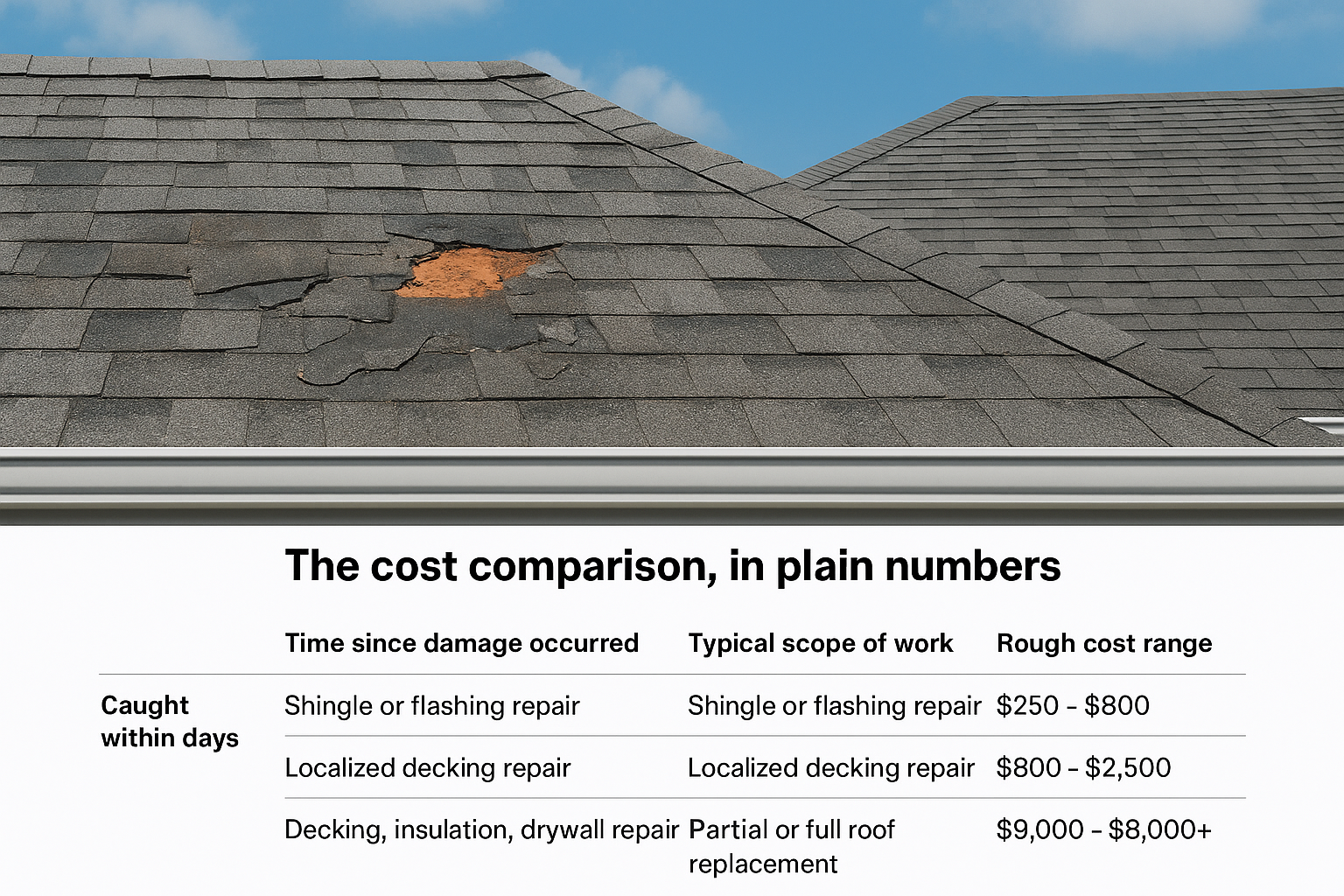
| Time since damage occurred | Typical scope of work | Rough cost range |
|---|---|---|
| Caught within days | Shingle or flashing repair | $250 - $800 |
| Ignored 1-3 months | Localized decking repair | $800 - $2,500 |
| Ignored 6+ months | Decking, insulation, drywall repair | $3,000 - $8,000+ |
| Ignored over a year | Partial or full roof replacement | $9,000 - $20,000+ |
These ranges shift based on roof size and materials, but the pattern holds on almost every job we've assessed: the number only grows while you wait.
Guessing whether a stain is old or new, or whether a missing shingle matters, isn't something most homeowners can do reliably from the ground. A trained eye can tell within minutes whether you're looking at cosmetic wear or a problem actively letting water in. That's the entire point of knowing how often a roof should be inspected and getting one scheduled the moment you notice something off, rather than waiting to see if it gets worse on its own. It almost always does.
Finding a residential roofing contractor you can actually rely on takes more effort than picking whoever ranks first in a search or knocks on your door after a storm, so it helps to know what separates reputable roofers from the rest. The roofing industry has a well-earned reputation for storm chasers who show up in unmarked trucks, quote inflated prices, and vanish before the warranty period even starts. Vetting a contractor properly before you sign anything, and knowing the red flags to avoid, protects both your wallet and your roof.
Before any contract, confirm the basics that separate an established local business from a fly-by-night crew:
Good contractors show you what they find instead of asking you to trust their word. Defend Roofing's approach, a 100+ photo Precision Roof Assessment on every project, is the kind of documentation you should expect as a baseline, not a bonus. If a contractor can't or won't show you clear photo evidence of the damage they're describing, that's worth questioning before you agree to anything.
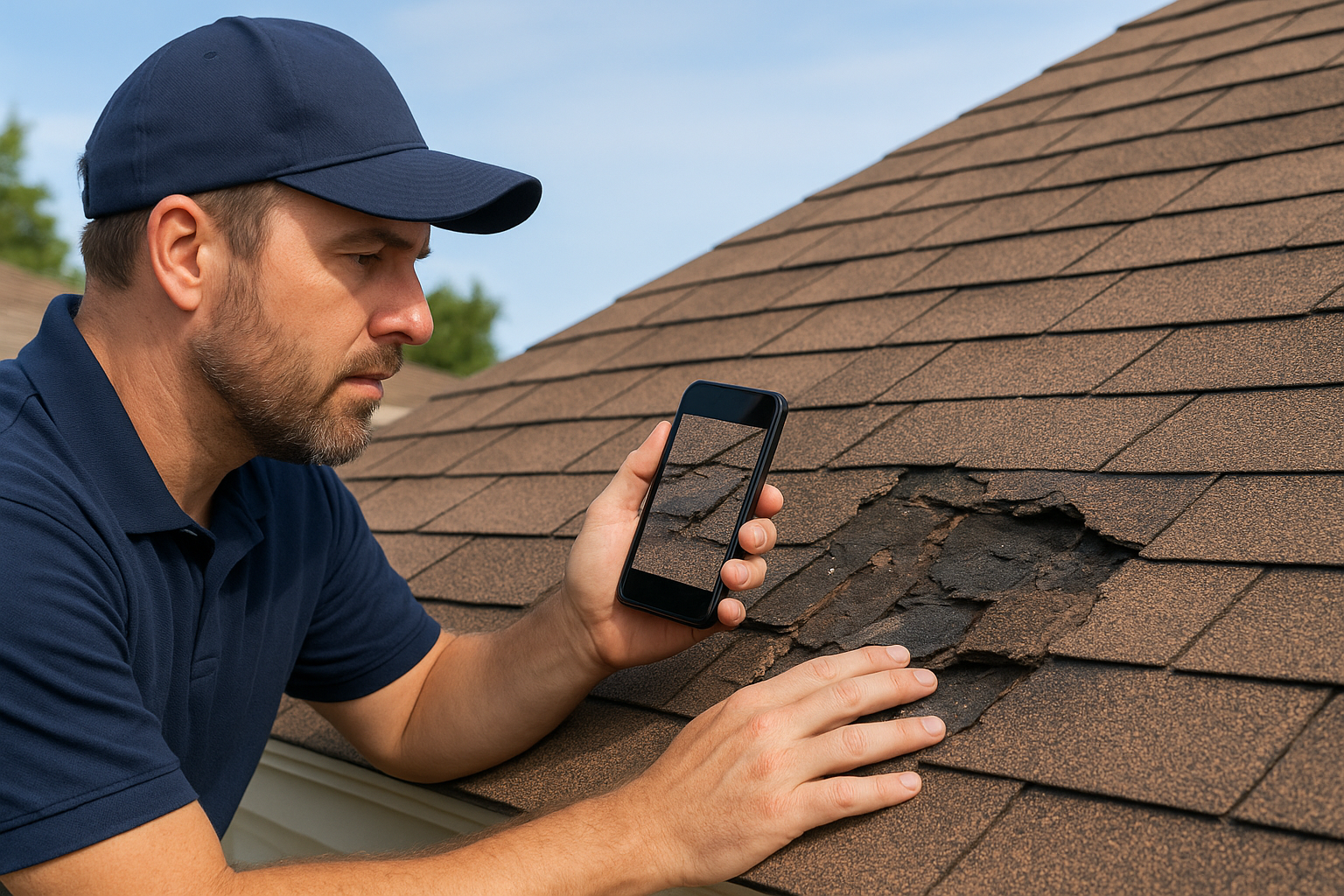
If a contractor won't show you photos of the damage, don't let them touch your roof.
Salespeople who push you to sign the same day, claim your insurance will "cover everything" before an adjuster has even looked at the roof, or discourage you from getting a second opinion are showing you exactly who they are. Reliable contractors explain their findings, patiently answer the essential questions to ask before hiring, and never make you feel rushed into a decision about something this expensive.
Ultimately, the right hire is someone who treats the estimate like a conversation, not a countdown. A residential roofing contractor worth your money will happily wait while you compare quotes, check references, and confirm their license, because they know their work holds up to that scrutiny.
Weighing roof repair vs replacement for your home comes down to three things: the age of your roof, how widespread the damage is, and whether the underlying structure is still sound. A one-off leak on a roof installed five years ago almost always calls for roofing roof repair, not replacement. The same leak on a roof pushing 20 years old, with granule loss across multiple slopes and shingles that are curling at the edges, usually means the repair will just be the first of several, each one buying you a little more time before the whole system fails anyway.
Most asphalt shingle roofs in Central Texas last 20 to 25 years, though shingle roof lifespan by shingle type varies, and that number drops if the roof has taken repeated hail hits. Once a roof passes 15 years, ask your contractor for an honest estimate of remaining lifespan before you approve any repair, because sinking money into a roof with two years left rarely makes sense. Contractors who default to replacement recommendations on a roof that's only a few years old, without a clear reason tied to actual damage, deserve a second opinion.
Localized damage, a few missing shingles, a cracked pipe boot, a section of lifted flashing, points toward repair. Damage spread across multiple roof planes, or decking that's soft in more than one spot, points toward roof replacement contractor territory instead. A proper inspection should tell you which category your roof falls into, backed by photos showing exactly where the problem areas are and how far they extend.
If damage shows up in more than one section of your roof, repair is usually a temporary fix, not a real solution.
| Situation | Likely recommendation |
|---|---|
| Roof under 10 years old, isolated damage | Repair |
| Roof 10-15 years old, damage in one area | Repair, monitor closely |
| Roof 15+ years old, damage in multiple areas | Replacement |
| Widespread granule loss or storm damage across all slopes | Replacement |
Second opinions cost you nothing but a little time, and they're worth getting whenever a contractor pushes replacement without showing you clear evidence why repair won't hold. Two or three assessments from established local companies will usually agree on the basics even if the price quotes differ, and that agreement is what gives you confidence in whichever direction you choose.
Once you've hired a contractor, the actual roofing roof repair or replacement process follows a fairly predictable sequence, and knowing that step-by-step roof replacement timeline ahead of time helps you spot delays or shortcuts before they become problems. Most residential projects move from inspection to contract to materials delivery to the work itself, then wrap up with cleanup and a final walkthrough. Understanding each stage means you're never left wondering whether something unusual is happening on your property.
Before a crew ever shows up, you should receive a detailed inspection report with photos, a written scope of work, and a firm price. Reputable companies also confirm material availability and give you a realistic start date rather than a vague window. If storm damage is involved, this is also when your contractor should help you understand what documentation your insurer will need.
A clear written scope before work starts is what separates a professional job from a guessing game.
Roof replacement typically takes one to three days for an average single-family home, weather permitting, though how long a replacement takes varies by material, while most repairs finish in a single day. During installation, expect noise, dumpster or trailer placement in your driveway, and crew members moving materials across your lawn and roof. A trustworthy crew protects landscaping and windows with tarps and plywood before tear-off begins, not as an afterthought once someone complains.
Site cleanup should include a magnetic nail sweep of your yard and driveway, not just a quick visual check for stray shingles. Every reputable roof installation ends with a walkthrough where the contractor shows you completed work, answers questions, and provides warranty paperwork on the spot rather than promising to email it later.
Expect two separate warranties: one from the shingle manufacturer covering material defects, and a contractor workmanship warranty covering installation errors. Keep both documents along with your final invoice and inspection photos, since you'll need them if a problem surfaces down the road or if you sell the home before the warranty period ends.
Most calls for roofing roof repair trace back to a short list of recurring issues, and knowing what they look like helps you describe the problem accurately when you first call a contractor. Understanding the fix behind each problem also tells you whether the quote you're holding matches the actual scope of work needed.
Wind and hail knock shingles loose or crack them outright, exposing the underlayment beneath. How to repair roof shingles is straightforward when it's caught early: remove the damaged shingle, check the decking underneath for moisture, and install a matching replacement tied into the existing pattern. Shingle matching matters more than homeowners expect, since a mismatched patch stands out and can affect resale appearance.
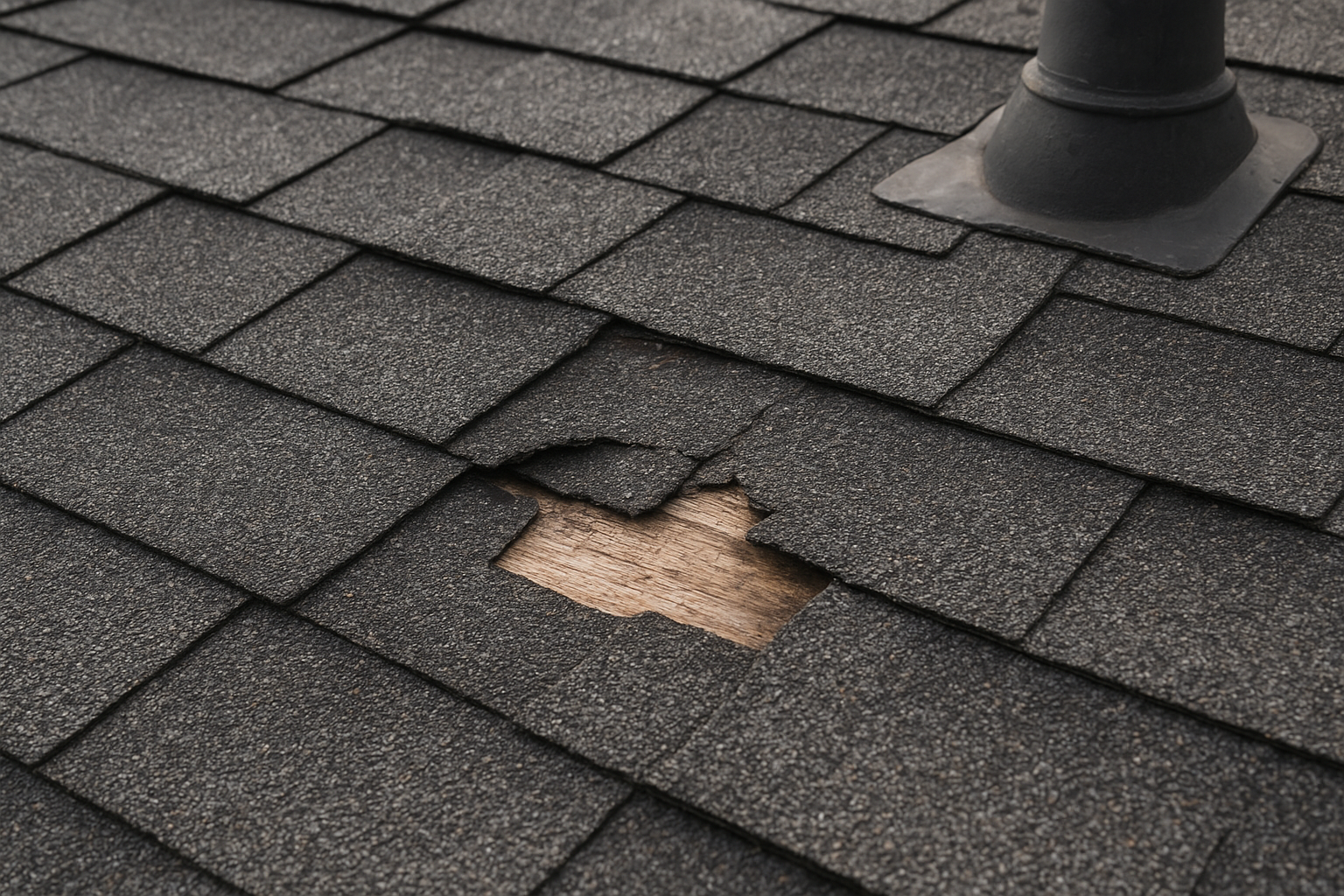
Flashing seals the joints where your roof meets chimneys, vents, skylights, and pipe boots, and it's one of the most common causes of roof leaks on an otherwise healthy roof. Rubber pipe boots crack from UV exposure within 10 to 12 years, well before the shingles around them wear out. Repair means removing the old flashing or boot, inspecting the decking for softness, and installing new material sealed properly against the surrounding shingles.
Most roof leaks start at flashing, not the shingles themselves.
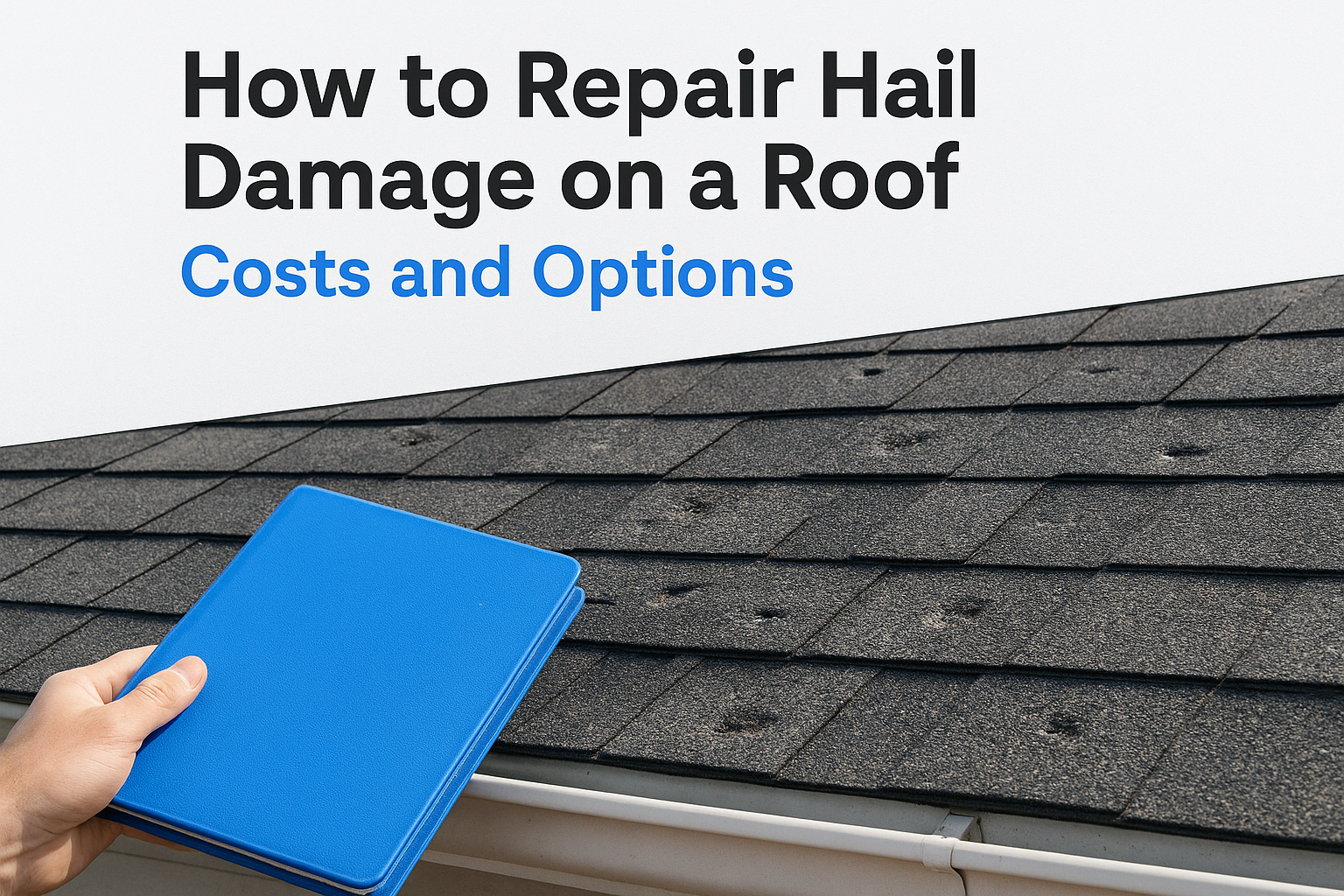
Hail impacts knock the protective granules off asphalt shingles, leaving dark bruised spots that accelerate UV damage and shorten the shingle's life even when no leak develops right away. A qualified inspector knows how to identify hail damage on a roof, checking for these bruises by feel and sight during a ground and roof-level inspection, since granule loss alone often qualifies for an insurance claim even without visible interior damage.
A sag anywhere on the roofline usually means the decking underneath has absorbed water over time and lost structural integrity. This repair requires removing shingles and underlayment in the affected area, cutting out and replacing the compromised plywood, then rebuilding the roofing layers back up. It's more involved than a shingle swap, which is exactly why catching leaks early matters so much.
Gutters that pull away from the fascia or overflow during heavy rain push water back under the roof edge instead of away from the house. Fixing this often means resecuring or replacing sections of gutter, adding proper flashing at the drip edge, and clearing debris that caused the backup in the first place. Left alone, this problem quietly rots fascia boards and roof edges long before it shows up as an obvious leak.
Pricing for roofing roof repair depends on the same factors that determine repair versus replacement: roof size, material, pitch, and how much decking needs to come out. A simple shingle patch might run a few hundred dollars, while a repair that involves decking and interior drywall climbs into the thousands quickly, as 2026 roof repair prices by damage type show. Getting a written, itemized estimate before work starts is the only way to know whether a quote reflects the actual damage or padding you don't need.
Storm-related damage, hail bruising, wind-lifted shingles, or a tree limb strike, usually qualifies for a homeowner's insurance claim, while normal wear from age typically doesn't, which is the line that decides what homeowners insurance covers for roof damage. Filing starts with a documented inspection that ties the damage to a specific storm date, since adjusters need that connection to approve coverage. A contractor experienced in insurance claim support will walk your roof alongside the adjuster, point out damage that's easy to miss from the ground, and make sure the estimate matches what the adjuster's own report shows.
An insurance claim only works when the damage on your roof matches the damage in your documentation.
Defend Roofing handles insurance claim support at every stage of that process, from the first photo to the final adjuster meeting, so homeowners aren't left translating insurance language on their own. Out-of-pocket costs after a claim usually come down to your deductible plus any upgrades beyond what the policy covers, like upgraded ventilation or a color change. Ask for that breakdown in writing before work begins, since verbal promises about what insurance "will cover" mean nothing once the final invoice arrives.
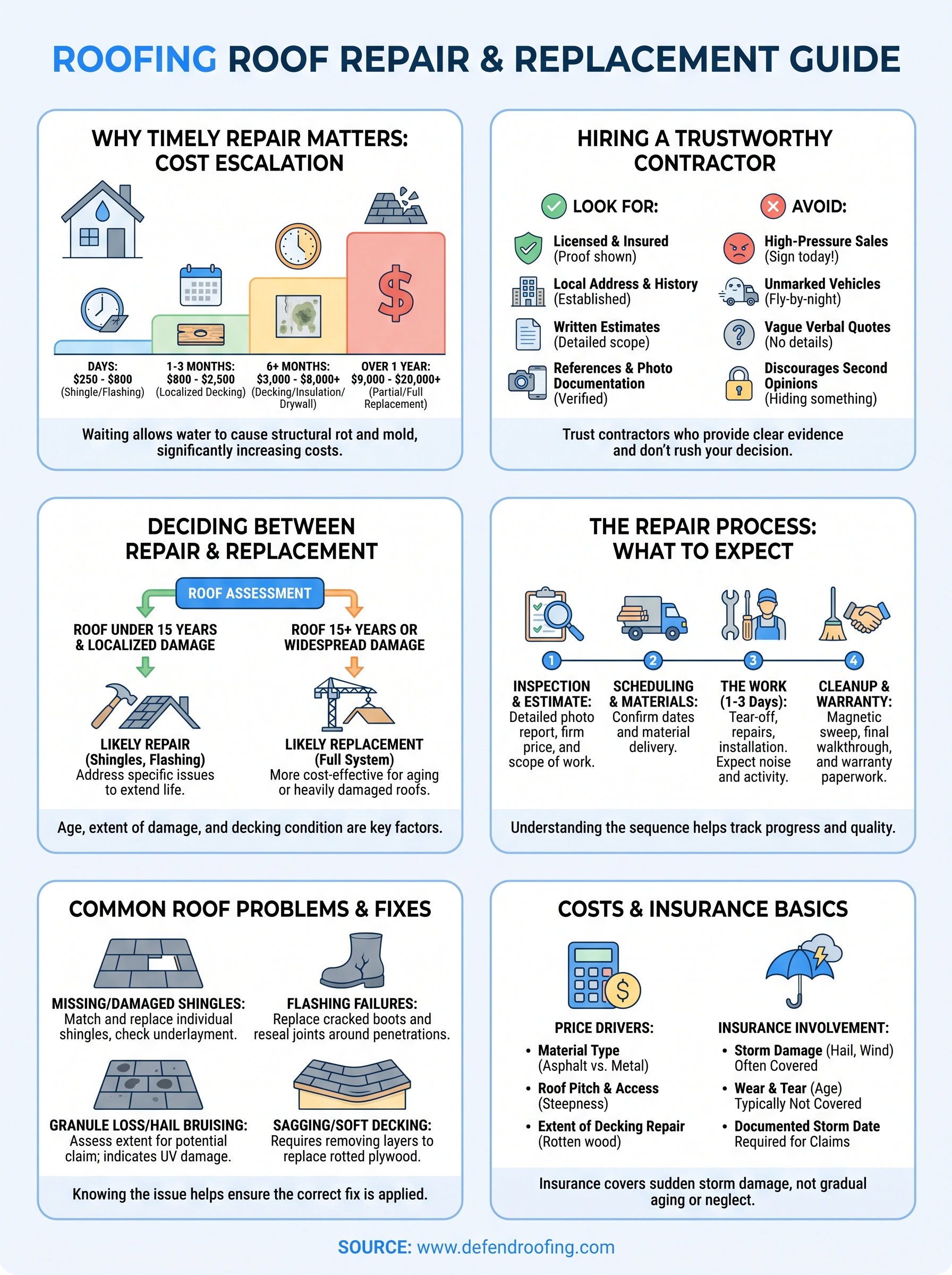
Every roof problem eventually forces the same decision: patch it now or let it decide for you later. Roofing roof repair works best when it's caught early, backed by real photo documentation, and handled by someone who tells you the truth about whether repair or replacement actually fits your situation. Getting there means asking the right questions before you sign anything, checking licensing and references, and never letting a pushy sales pitch rush a decision this expensive.
Familiiar with the warning signs now, you're in a better position than most homeowners who call a contractor for the first time mid-crisis. Trust the inspection, trust the documentation, and choose the crew willing to show you the evidence instead of asking you to take their word for it.
If you're noticing damage or just want a second opinion, get a free photo-documented roof assessment from Defend Roofing and see what an honest answer looks like.